

How to Save Space in a Training Studio Without Losing Functionality
4 March 2026
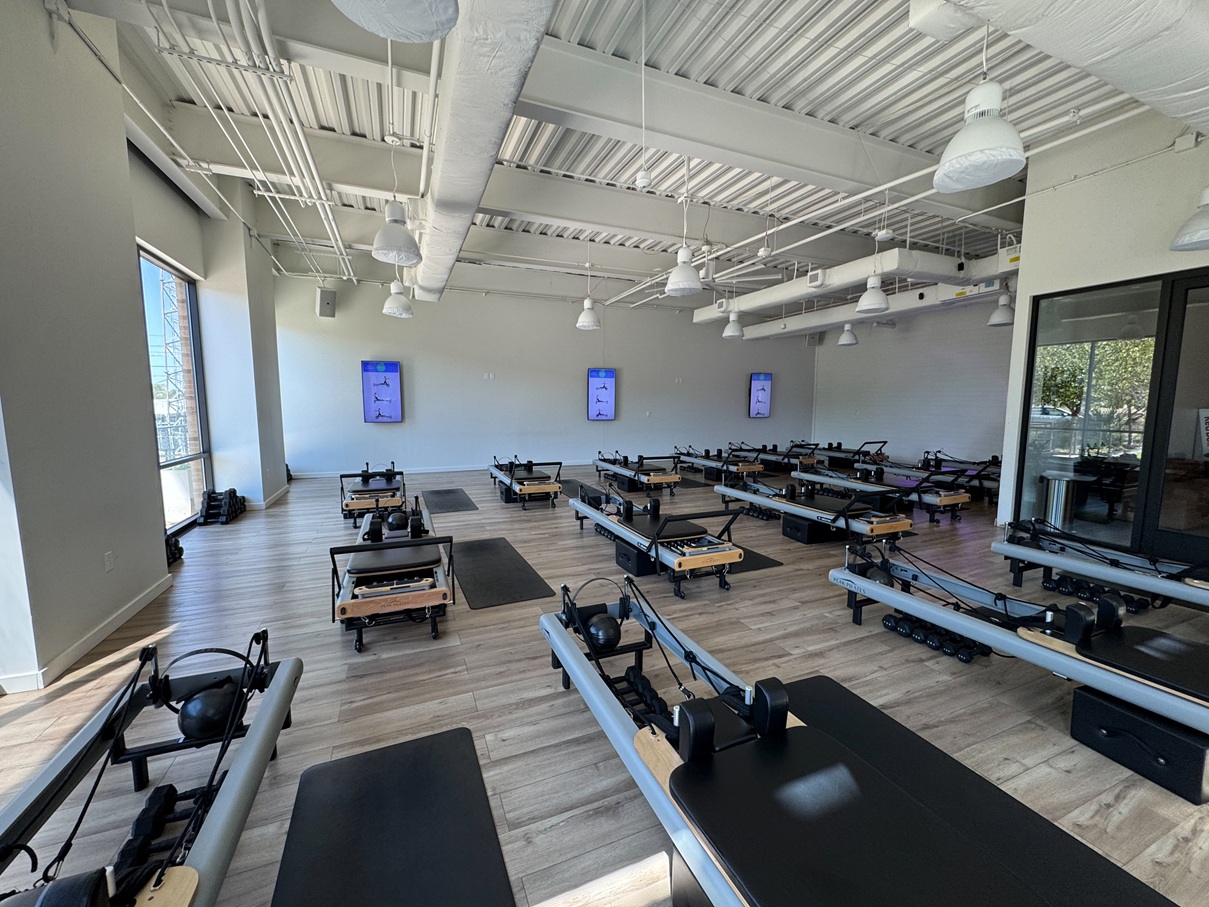
The fitness market has changed profoundly. Modern studios — especially boutique and personal-training-focused ones — must operate under high rents while answering ever higher client expectations. For many people a "room with weights" is no longer the point; they want a complete experience — comfort, aesthetics, a sense of space, and training matched to their needs. Hence today's key question: how do you expand a studio's capabilities without expanding its floor area?
For years the answer was more equipment. Another machine was meant to widen the offer; another rack to improve functionality. In practice it overloaded the space and broke the flow of work. Trainers reorganised the room between classes, and clients navigated a labyrinth of devices. Modern studio design rests on a different assumption: functionality comes not from the amount of equipment but from the intelligent organisation of space. In this approach the walls become decisive, with training functions integrated into one system — exactly the concept BenchK illustrates.
From quantity of equipment to range of possibilities
A traditional gym works like a tool warehouse — every exercise has its own station. The problem is that modern training has stopped being a set of isolated exercises. It is a movement process that demands transitions, rotations, changes of direction, and whole-body work. Overcrowding the floor creates constraints: it narrows movement, hampers functional training, and drains the dynamism of group classes. The client waits for a slot or adapts the movement to the space. A modern studio should therefore not maximise the number of devices but maximise the range of uses of a single training zone.
The BenchK Ladder with the Recoil resistance system redefines how functionality is conceived. One wall becomes a platform for strength, mobility, stabilisation, and motor work. Instead of separate stations there is one coherent working area serving many training goals. The studio stops behaving like a collection of points and starts behaving like a system.
The wall as a training space
In most fitness facilities the walls play a purely "technical" role today — they mark the boundaries of the space but contribute nothing to its training function. Yet from a biomechanical perspective it is precisely vertical anchor points that open the greatest possibilities: they let movement run in different directions, make it easy to change vectors of work, and allow load to be scaled precisely without adding more devices.
Wall-based training also gives you something priceless in client work — natural progressions and regressions. This matters especially in personal, medical, and athletic training, where difficulty has to match the current abilities of the person exercising. The same exercise can be made easier or harder without changing stations — just change the body angle, the anchor point, or the level of resistance.
That is exactly the principle behind the BenchK + Recoil system, which turns the wall into an active training tool. With everything integrated on the wall, the floor is genuinely reclaimed — the room becomes freer, more flexible, ready for dynamic work and stationary exercise alike. There is no more shuffling of equipment; the character of a session changes fluidly, without breaking the rhythm of the day.
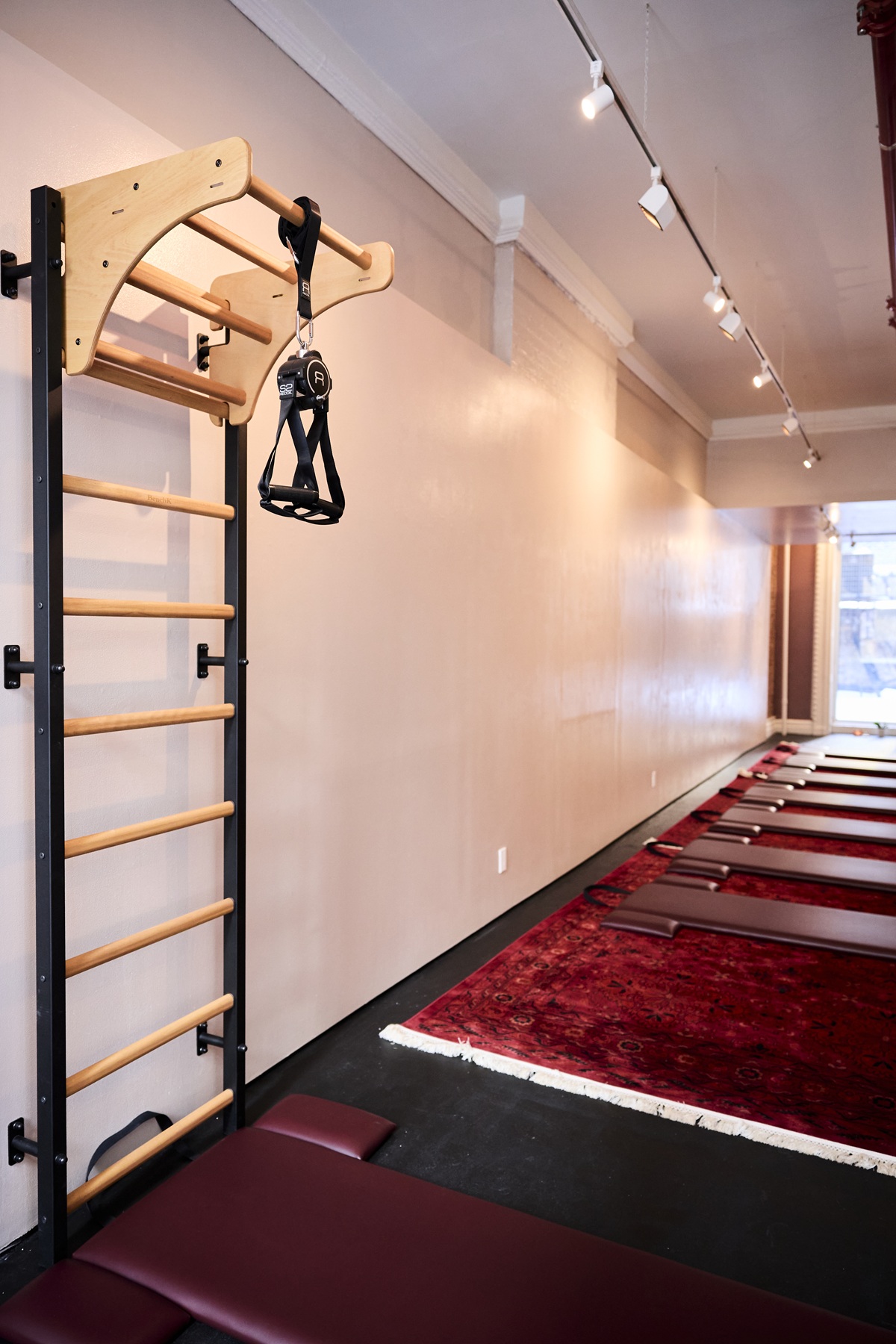
In practice the same zone can run in different modes — calm regeneration and mobility classes in the morning, more therapeutic personal training during the day, and intense group formats in the evening. All without moving machines, without reorganising the room, without dead time between training blocks.
The studio starts to run more smoothly and predictably, and flow becomes a real operational advantage — especially where schedules are tight and space is limited.
Training variety without adding machines
Every studio owner knows the moment: an idea for a new service appears, but there is no room for new equipment. The offer stays limited despite the coaching team's potential. The modular nature of wall systems solves this. Changing the height of an anchor point, the direction of resistance, or the position of the body creates an entirely new training stimulus.
One zone can therefore serve strength training, medical training, sports motor skills, metabolic work, posture work, and more — not by swapping equipment but by changing its use. For the client it means more variety and a feeling of individual attention. For the trainer, freedom to programme and be creative. For the owner, far higher efficiency per square metre. The studio does not need more floor area to offer more.
A space that keeps up with the timetable
The best-designed space has no "dead hours" — whatever the time of day, it stays useful and adapts easily to current needs. In a classic layout that varies: some equipment is used only in specific class types and otherwise just occupies space, limiting freedom of movement and the studio's flexibility.
Integrated wall systems change that logic. Switching formats requires no rearranging of equipment, so the studio runs more smoothly and the transitions between training blocks are shorter and more natural. The number of possible sessions per day grows, "technical breaks" shrink, and the studio serves more clients without feeling crowded. Just as important, an ordered, visually light space builds a stronger impression of quality. Clients read spacious, minimalist interiors as more professional and more premium — even when the floor area is modest.
Saving space in a training studio today is not about reducing functions but about integrating them. Instead of multiplying devices, modern facilities use architecture and modularity so that one space can serve many training scenarios. Using the wall as an active working zone reclaims the floor — and with it freedom of movement, a flexible timetable, and higher-quality training. BenchK represents exactly this approach: less equipment on the floor, more possibility in the space. It is not merely a way to save square metres but a real strategy for building an effective, modern fitness studio.