

Fun and Effective Wall-Bar Exercises to Strengthen Kids' Muscles
12 June 2024
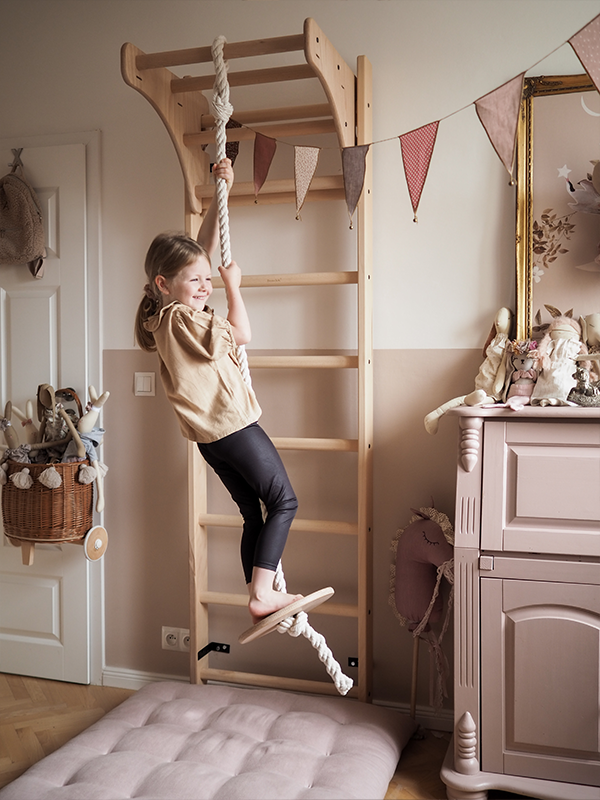
The wall bar is not only a fixture of gym halls and playgrounds — it is also a superb way to strengthen children's muscles at home. The benefits of regular wall-bar exercise are many: better muscle strength, developing coordination, and building motor skills. Weaving fun, effective wall-bar exercises into the daily routine can turn physical activity from a healthy obligation into a pleasure. Morning gymnastics, play, or a way to unwind in the evening — the wall bar can become a favourite part of every day. The key is showing children how to use it safely and enjoyably, which is also a lovely opportunity for family time together.
The most effective wall-bar exercises for strengthening kids' muscles
Wall-bar exercise is a superb route to children's all-round physical development. It strengthens muscles, improves coordination, and builds healthy activity habits from the earliest years. Here are some of the most effective exercises to do on the ladder.
Climbing the ladder
Climbing to the top of the ladder and coming back down is the foundational exercise — it develops muscle strength and coordination, and repeated a few times builds endurance and confidence. Depending on the child's age and ability you can increase the number of rounds and the tempo, or add extra elements: a sit-up at the base after each descent, or a new task after every completed set. Children love these challenges and join in eagerly.
Straight-arm hang
This exercise builds strength and endurance in the upper body, particularly the arms and hands. The child grips the ladder at shoulder height and hangs, holding the position as long as possible. Practised regularly it also improves coordination — and it can be extended, for example by raising the knees into a hanging tuck.
The pendulum
The child hangs by the hands from a rung and lets the body swing like a pendulum — either swinging the whole body, or just the legs while keeping the chest still. The exercise develops coordination beautifully and strengthens the abdominal and back muscles.
Regular wall-bar exercise doesn't just strengthen muscles — it improves overall fitness, coordination, and confidence. Built into the daily routine, it brings real health benefits and can make physical activity a lifelong pleasure.
Can wall-bar training be play at the same time?
The multifunctional BenchK wall bar is one of the most versatile things you can put in a child's room: exercise equipment and play element in one. Children today have access to endless gadgets, yet most are quickly abandoned and deliver little. BenchK wall bars are different — they offer endless possibilities for play and exercise while genuinely supporting physical development.
A wall bar is not only a tool for strengthening muscles but a platform for creative play. The exercises improve coordination, strengthen the body, and shape healthy habits from the earliest years — and the ladder becomes a reason to spend time actively, which matters enormously in the age of ever-present screens. Adding play to exercise makes children engage far more willingly. Here are three games that turn training into an adventure.
Spider on the ladder
The exercise: the child climbs the ladder holding on with both hands and feet, imitating a spider's movements — up and down, trying to touch as many rungs as possible. A parent spots the child throughout.
- strengthens the legs and abdominal muscles;
- improves coordination and balance;
- encourages creative thinking and play.
Ninja jumps
The exercise: standing beside the ladder, the child hops from rung to rung at different heights — holding a rung at shoulder height and jumping with both feet together, or alternating one foot at a time.
- strengthens the leg muscles;
- improves agility and reaction speed;
- builds confidence in dynamic movement.
Stork on one leg
The exercise: the child stands on one rung holding on with one hand, the other arm stretched out for balance — then lifts one leg and holds the position for a few seconds before switching legs.
- strengthens the legs and abdominal muscles;
- improves balance and stability;
- builds concentration and coordination.
Which accessories enrich wall-bar training?
The multifunctional BenchK wall bar offers a wide repertoire on its own, but the right accessories make training even more varied, effective, and exciting for children — developing more muscle groups, coordination, and agility along the way.
Gymnastics kit
A set with a rope-mounted wooden swing and adjustable gymnastics rings is one of the most popular and most effective wall-bar accessories for children. Hung at a height matched to the child, it opens up hangs, pull-ups, and climbing games of every kind.
Pull-up bar
A pull-up bar mounted at the right height turns the ladder into a superb tool for strengthening the upper body — arms, back, and chest — safely and effectively. Always spot your child during bar work; a gymnastics mattress below is ideal, cushioning any slips and making floor exercises comfortable too.
How often should children train on the wall bar?
Wall-bar activity weaves naturally into children's daily play — they exercise and have fun at the same time, which keeps motivation high. The ladder lends itself to games that engage different muscle groups and develop coordination and agility. Every child is different, so match the intensity and type of exercise to their individual needs and abilities, and keep an eye out for signs of tiredness or discomfort.
A wall bar is more than exercise equipment — it is a tool that inspires children to move, supports their physical and mental development, and encourages a healthy lifestyle. Make it part of everyday play, and discover together the joy of being active.